
Root Canal on a Molar
Molars — your back teeth — are the most complex teeth to treat with a root canal. With three to four root canals, curved roots, and difficult-to-reach positions at the back of the mouth, molar root canals benefit the most from the precision and experience of an endodontist.
What Makes a Molar Root Canal More Complex?
Front teeth typically have a single root canal. Premolars have one or two. But molars — especially first and second molars — have three to four root canals, and sometimes more. These canals are often narrow, curved, and branching, creating a complex internal anatomy that must be thoroughly cleaned and sealed to eliminate infection.
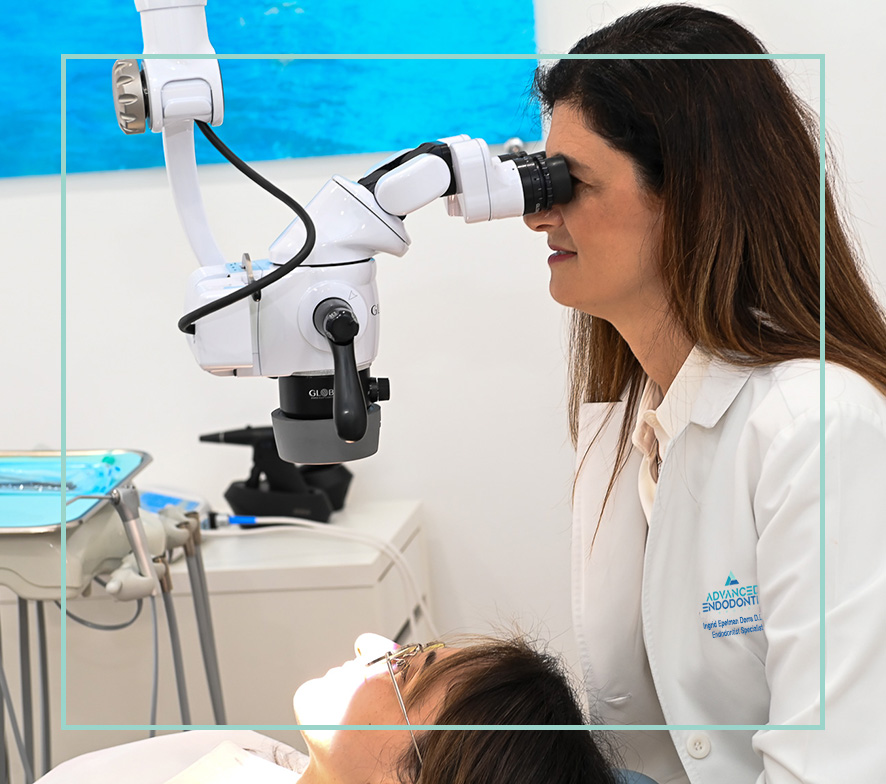
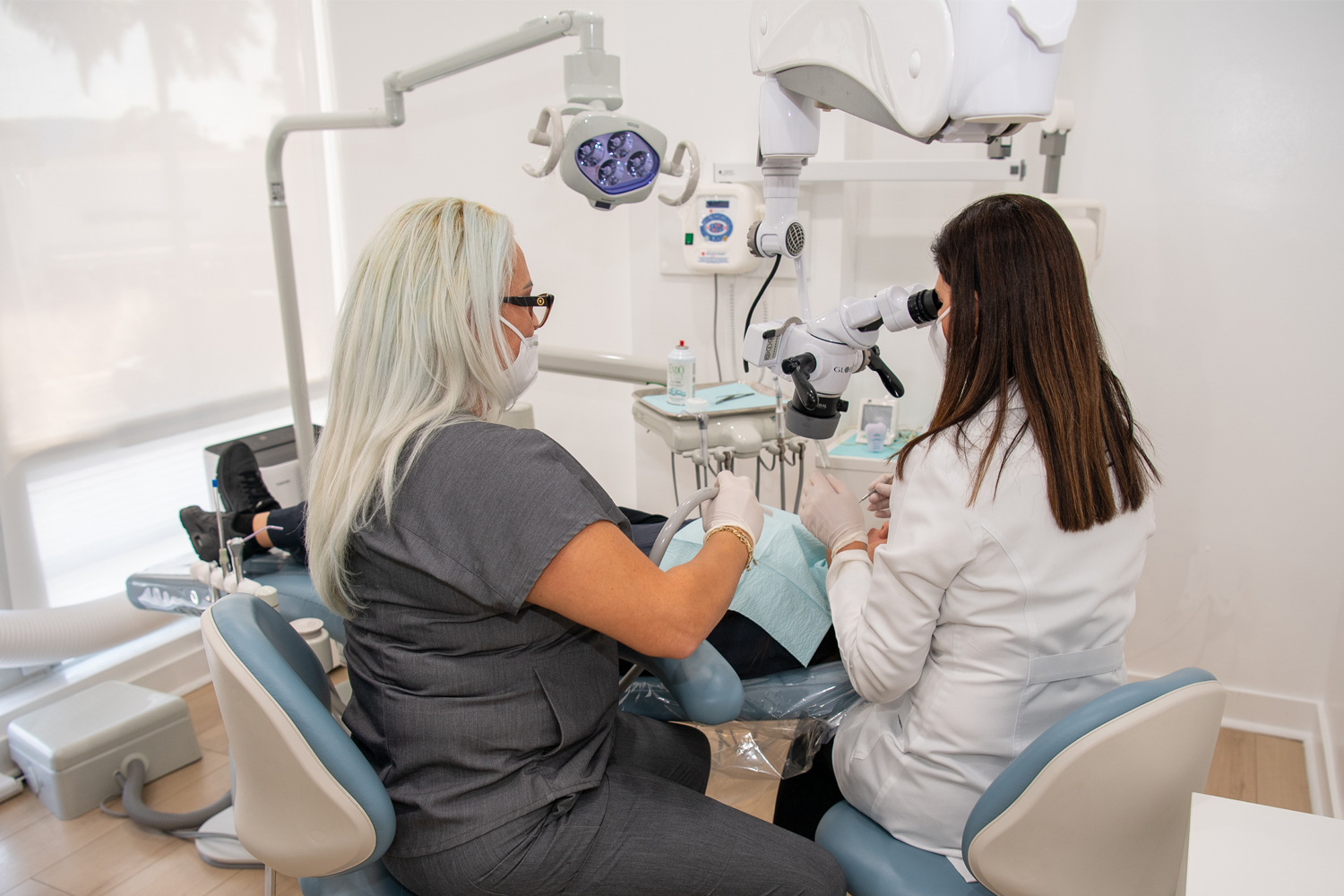
Molars also sit at the back of the mouth where visibility and access are limited. This is precisely why surgical microscopes — which magnify the tooth up to 25x — are so valuable for molar root canals. At Advanced Endodontic Group, every molar root canal is performed under microscope magnification with 3D CBCT imaging guidance, giving our endodontists the visual detail needed to treat even the most complex anatomy.
These factors also make molars the tooth type most commonly referred from general dentists to endodontists. When precision matters most, specialist care makes the biggest difference.
How We Treat Molar Root Canals
At Advanced Endodontic Group, molar root canals receive the full benefit of our technology platform. Before treatment begins, 3D cone-beam imaging maps every canal and every curve in your molar's root system. This three-dimensional view reveals anatomy that traditional two-dimensional X-rays often miss — including extra canals, unusual branching patterns, and hidden cracks.
During the procedure, our endodontists work under surgical microscope magnification to locate and treat every canal with precision. Advanced rotary instruments clean and shape the canals efficiently. Fotona laser-activated irrigation then streams the cleaning solution deep into lateral canals and dentinal tubules — areas that are especially difficult to reach in molars — for superior disinfection.
Despite the additional complexity, most molar root canals at our office are completed in a single visit. Treatment time is typically 60 to 90 minutes, depending on the specific anatomy of your tooth.
Why a Crown Is Essential After a Molar Root Canal
After any root canal, a permanent restoration is important — but it is especially critical for molars. Molars bear the greatest biting force in your mouth. A molar that has had a root canal without a crown is at significant risk of fracture, which could result in the loss of the tooth.
We recommend scheduling your crown appointment with your general dentist within two to four weeks of the root canal. Our team will send a detailed report and imaging to your dentist so they can plan the restoration. For more about what to expect after treatment, see our root canal recovery guide.
With a properly placed crown and good oral hygiene, a molar treated with a root canal can function normally for many years — often for a lifetime. Saving the molar is almost always preferred over extraction, which would require replacement with an implant or bridge at significantly greater cost and complexity.
Frequently Asked Questions
-
Yes. Molars have three to four root canals compared to one in a front tooth. The canals are often curved and narrow, and the tooth sits at the back of the mouth where access is limited. This complexity is why molar root canals are the most common reason general dentists refer patients to endodontists.
-
Yes. The additional complexity and treatment time required for molars makes them the most expensive type of root canal. However, saving a molar is still typically less expensive than extracting it and replacing it with an implant. See our cost page for details.
-
Most molar root canals at our office are completed in a single visit lasting 60 to 90 minutes. Some particularly complex cases may require a second appointment.
-
Yes. A crown is strongly recommended for every molar that has had a root canal. Molars bear the greatest biting forces, and without the structural reinforcement of a crown, the tooth is at high risk of fracture. Completing the crown promptly protects your investment in the root canal.
-
Some general dentists perform molar root canals, but many refer these cases to endodontists because of the complexity involved. An endodontist's specialized training, surgical microscopes, and 3D imaging are especially valuable for ensuring every canal in a molar is located, cleaned, and sealed properly.
Need a Molar Root Canal?
Our endodontic specialists are here to help. Schedule your consultation at either of our South Florida locations.
Schedule Your Appointment



Your best option
We keep fluid communication with the dentists who refer their patients to us, making a team of joint assistance so that the patient is treated efficiently. After the endodontic treatment, the dentist is provided with a detailed report of all the procedures and their results so that they can continue with the dental restoration.
A canal treatment is the last resort before extracting a tooth to keep those teeth whose nerves have been affected. We are specialists in Endodontics, and we count with the best professionals and the latest technologies to assist you. So whether you are a patient or a dentist, Advanced Endodontic Group is the solution you are looking for..