


Endodontic
Retreatment
With proper treatment, even the teeth that have had a root canal treatment can last all life long. But sometimes, a tooth that has been treated does not heal properly and may become painful some months or even years after the treatment.
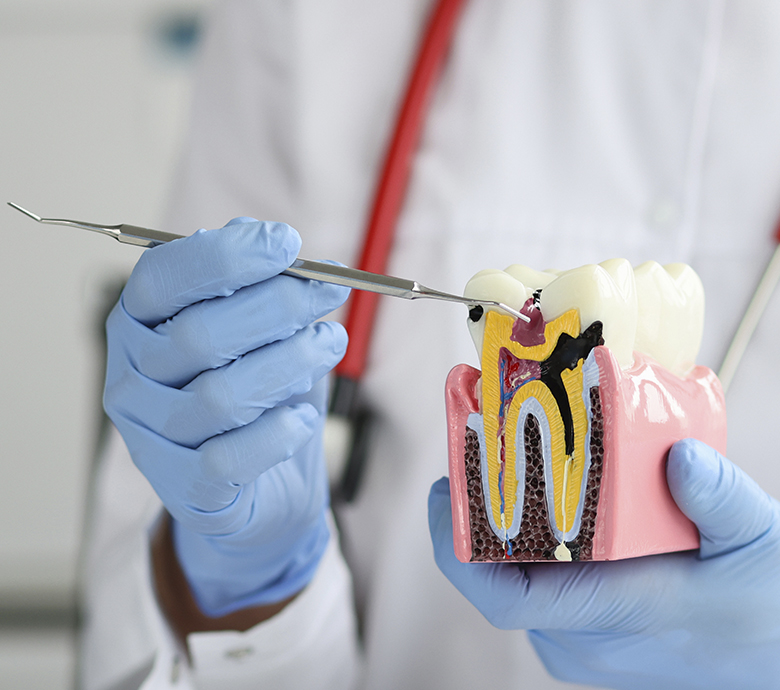
In this situation, an additional endodontic procedure can save the natural tooth. First, the filling material of the old root canal is removed, and the inside of the tooth is cleaned thoroughly.
At the end of the procedure, the tooth is sealed with a biocompatible filling material that will protect it against future infections.
Expert Endodontic Retreatment Services in Miami Lakes
Expert Endodontic Retreatment in Miami will help you to restore your smile.
Feeling fresh pain in a tooth treated with a root canal? Many others are just like you. Occasionally, a tooth doesn't heal as planned or gets reinfected years or even months later. Specialising in endodontic retreatment in Miami, Advanced Endodontic Group gives patients a second opportunity to save their natural teeth.
Led by Dr. Ingrid Epelman-Dorra, our knowledgeable staff uses cutting-edge technology—including surgical microscopes, 3D digital imaging, and ultrasonic instruments—to precisely identify and treat challenging situations. We meticulously remove the old filling material, clean the canals completely, and reseal the tooth with a biocompatible material during retreatment to stop future infections.
Our approach is centered on patient comfort and individualised care. Our caring team guarantees a smooth and comforting experience from the time you enter our Miami Lakes or Bay Harbor Islands location. Don't let ongoing dental pain lower your quality of life. Rely on Miami's endodontic retreatment specialists to bring back your oral health.
Endodontic Retreatment FAQs
Understanding retreatment when a previously treated tooth needs additional care
-
Endodontic retreatment is performed when a previously treated tooth does not heal properly after a root canal or becomes reinfected.
Retreatment is not simply "redoing" the original procedure. It is a careful revision of the previous root canal treatment. Our endodontist follows a specific retreatment protocol designed to identify and address the underlying cause of failure.
This process typically includes:
- Removing the existing root canal filling material
- Carefully re-evaluating the internal anatomy of the tooth
- Using cone beam computed tomography (CBCT) imaging to assess the tooth in three dimensions
- Identifying missed canals, hidden infection, fractures, or complex anatomy
- Thoroughly cleaning, disinfecting, and reshaping the canals
- Sealing the canals again to prevent reinfection
-
Root canal retreatment may be necessary if a previously treated tooth does not heal properly or becomes reinfected. This can occur for several reasons, including:
- The initial root canal did not completely eliminate all bacteria
- Previously undetected or missed canals were not treated during the first procedure
- New decay develops around the tooth
- A cracked or failing crown or filling allows bacteria to re-enter the tooth
- A persistent lesion (infection at the root tip) does not resolve after treatment
When this occurs, endodontic retreatment allows the tooth to be carefully re-evaluated, disinfected, and resealed to eliminate infection and preserve the natural tooth whenever possible.
-
Root canal retreatment is similar to the original root canal procedure, but it is performed as a careful revision of the previous treatment. Each case is evaluated individually, and the retreatment protocol is adjusted on a case-by-case basis depending on the reason the first treatment did not heal properly.
During retreatment, the endodontist:
- Carefully reopens the tooth
- Removes the existing root canal filling material and any posts or restorative components
- Thoroughly cleans and reshapes the canals
- Searches for hidden, missed, or previously untreated canals
- Disinfects the canal system
- Refills and seals the tooth to prevent reinfection
Because retreatment cases can be more complex, advanced diagnostic tools and imaging are often used to identify the underlying cause of failure and ensure the most predictable outcome.
-
Retreatment is performed under local anesthesia, so you should not feel pain during the procedure. Some soreness or mild discomfort afterward is normal and can usually be managed with over-the-counter pain relievers.
-
The duration varies based on case complexity, but endodontic retreatments generally take about the same amount of time as an initial root canal — typically one to a few visits as needed. Your endodontist will explain your treatment plan during your consultation.
-
Healing time after root canal retreatment varies from patient to patient and depends on several factors, including the severity of the infection, the size of any lesion present, and the body's natural healing response.
Because each case is unique, recovery and bone healing are evaluated on a case-by-case basis. Follow-up examinations and imaging are important to monitor progress and ensure the infection is resolving properly.
Your endodontist will review your specific situation, discuss expected healing timelines, and answer any questions you may have throughout the process.
-
Yes. The goal of endodontic retreatment is to eliminate infection and preserve your natural tooth. In many cases, retreatment successfully restores health and function without the need for extraction.
-
You may need root canal retreatment if you experience:
- Persistent or renewed tooth pain in a tooth that previously had a root canal
- Swelling, tenderness, or gum irritation near the treated tooth
- Signs of infection, such as a recurring abscess or drainage
- Discomfort or pressure when biting or chewing
In some cases, there may be no noticeable symptoms. A persistent infection may only be detected on a radiograph (X-ray) during a routine dental examination.
If you notice any warning signs — or if your dentist identifies concerns on imaging — an evaluation by an endodontist can help determine the appropriate next steps and preserve your natural tooth whenever possible.
-
After root canal retreatment, your endodontist may place a temporary filling to protect the tooth until it can be permanently restored. You will then return to your general dentist for a permanent restoration, such as a dental crown, to strengthen and protect the tooth and restore full function.
Completing the final restoration promptly is important for long-term success. Good oral hygiene and regular dental check-ups also play a key role in maintaining the health of the treated tooth.
-
Root canal retreatment has a high success rate, and clinical research shows that many previously treated teeth can be successfully preserved with proper retreatment. However, outcomes depend on several factors, including the severity of the infection, the condition of the remaining tooth structure, the presence of fractures, and the quality of the final restoration.
Every case is unique. During your evaluation, your endodontist will carefully assess your tooth, review imaging, and discuss your specific prognosis and treatment options.
While no dental procedure can guarantee results, retreatment is often a highly predictable way to eliminate infection and give your natural tooth the best possible chance for long-term healing and function.
-
You typically can be referred by your general dentist, but most endodontic offices (including Advanced Endodontic Group) also accept patients directly if you're experiencing symptoms or have concerns about a previously treated tooth.
-
Call your Advanced Endodontic Group office in Miami Lakes or Bay Harbor Islands to schedule a consultation. A thorough exam and digital imaging will help determine if retreatment is the best option for preserving your tooth.
Concerned about a previously treated tooth?
Schedule a retreatment consultation today.