
Apicoectomy in Miami: Microsurgery to Save Your Tooth
Apicoectomy in Miami: an apicoectomy is endodontic microsurgery that removes the infected tip of a tooth root and seals the canal from the root end. Advanced Endodontic Group performs apicoectomies under a surgical microscope at our Miami Lakes and Bay Harbor Islands offices to save teeth that a root canal alone could not.
Why See an Endodontist for an Apicoectomy in Miami?
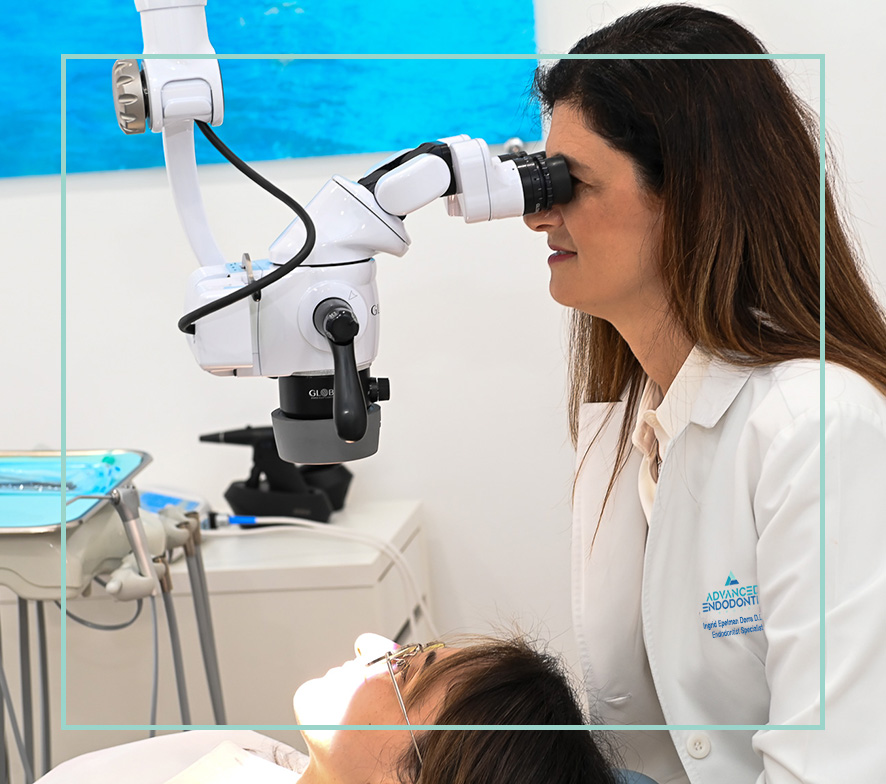
An apicoectomy is a microsurgical procedure, and outcomes depend on magnification, root-end preparation with ultrasonic tips, and a biocompatible root-end filling. Endodontists train for two to three years beyond dental school in these techniques. Our entire practice is limited to endodontics, and every apicoectomy at Advanced Endodontic Group is performed under a surgical microscope with CBCT planning.
The difference between traditional root-end surgery and modern endodontic microsurgery is large. A meta-analysis in the Journal of Endodontics (Setzer et al., 2010) found a 94% success rate for microsurgery versus 59% for traditional techniques (as of 2010). The gap comes from the microscope, ultrasonic root-end preparation, and materials such as MTA and bioceramic cements.
Led by Dr. Ingrid Epelman-Dorra with over 25 years of focused experience, our team performs these procedures regularly at both offices. General dentists across Miami-Dade refer their surgical cases to us because the equipment and the repetition are not practical in a general practice.
"Apical microsurgery is accurate and minimally invasive, produces few complications."Expert consensus on apical microsurgery, International Journal of Oral Science, 2025
What Is an Apicoectomy?
An apicoectomy, also called root-end surgery or endodontic microsurgery, removes the last few millimeters of a tooth root along with the infected tissue around it. The endodontist then prepares a small cavity at the cut root end and seals it with a biocompatible filling. The tooth, its crown, and its existing root canal filling stay in place.
The procedure treats persistent infection at the root tip (apical periodontitis) that did not resolve after a root canal or a retreatment. Because the surgery works from the outside of the root, it can reach anatomy a file cannot: lateral canals, isthmuses between canals, microfractures at the apex, and cysts in the bone.
An apicoectomy is different from a root canal retreatment. Retreatment reopens the tooth from the crown and recleans the canals. An apicoectomy leaves the crown and canal filling alone and addresses the problem at the root tip through the gum.
When Do You Need an Apicoectomy Instead of a Retreatment?
An apicoectomy is recommended when a root canal or retreatment has failed and the canal cannot be safely reopened from the top. Common reasons include a post and crown that would be damaged by reopening, a canal blocked by calcification or a separated instrument, a persistent cyst at the root tip, or a suspected crack that needs direct inspection.
| Situation | Usual first choice |
|---|---|
| Root canal failed, no post, canals accessible | Nonsurgical retreatment |
| Retreatment already done, infection persists | Apicoectomy |
| Well-fitting crown and post; reopening risks fracture | Apicoectomy |
| Cyst or lesion that needs a biopsy | Apicoectomy |
| Separated file or calcified canal blocks access | Apicoectomy |
| Vertical root fracture or tooth not restorable | Extraction |
A systematic review by Torabinejad et al. (Journal of Endodontics, 2009, summarized in the NIHR DARE database) found surgery healed faster at two to four years while nonsurgical retreatment held up better at four to six years (as of 2009). We use that evidence when advising: retreatment first when access is good, surgery when it is not.
What Happens During an Apicoectomy?
The visit takes about 60 to 90 minutes under local anesthesia. We make a small incision in the gum near the root tip, remove a few millimeters of root and the infected tissue, prepare the root end with ultrasonic tips under the microscope, place a bioceramic or MTA filling, and close with fine sutures. Most patients drive themselves home.
- Review the CBCT scan to map the root tip, nerve, and sinus position
- Numb the area with local anesthesia
- Lift a small flap of gum tissue to expose the bone over the root
- Remove the infected tissue and about 3 millimeters of root tip
- Prepare and seal the root end under 25x magnification
- Reposition the gum and place sutures
- Remove the sutures at a follow-up visit about one week later
Before surgery we review your medical history and current medications. Patients on blood thinners, or with conditions that affect healing, may need clearance from their physician first. See our first visit page for what to bring.
What Is the Success Rate of an Apicoectomy?
Modern apicoectomy has a high success rate when performed by an endodontist with a microscope. A 2020 meta-analysis in Medicina (Pinto et al.) reported 91.3% success in randomized trials, and a 2025 meta-analysis found an 89% pooled success rate for endodontic microsurgery compared with 78% for single implants under matching criteria.
Success is measured by healing of the bone around the root tip on follow-up imaging plus the absence of symptoms. Factors that improve the odds: front teeth and premolars over molars, smaller lesions, a well-sealed crown, and CBCT planning. Long-term studies show some early successes revert, so we follow patients with imaging at six and twelve months (91.3% figure as of 2020).
What Is Recovery Like After an Apicoectomy?
Recovery after an apicoectomy is usually mild. Expect swelling and bruising near the surgical site for two to three days, controlled with a cold compress and over-the-counter pain relievers. Sutures come out in about a week. Most patients return to work the next day and eat soft foods on the opposite side for the first few days.
- Apply a cold compress for 20 minutes on, 20 minutes off, during the first 24 hours
- Take pain medication before the anesthesia wears off, as directed
- Avoid lifting the lip to look at the sutures
- Skip brushing the surgical site for the first day, then rinse gently
- Eat soft, cool foods and chew on the other side
- Do not smoke, since it slows healing
- Call the office if swelling increases after day three or bleeding does not stop
Bone healing at the root tip continues for months. We take a follow-up X-ray or CBCT at six and twelve months to confirm the lesion is resolving, and we send each report to your general dentist.
How Much Does an Apicoectomy Cost in Miami?
Apicoectomy cost in Miami typically runs $1,200 to $2,500 depending on the tooth, the number of roots treated, and whether a bone graft or biopsy is needed. Front teeth are simpler than molars. Most PPO dental plans cover part of endodontic surgery after the deductible, and we verify your benefits and provide a written estimate before scheduling.
Compared with extraction and an implant, which typically costs $3,500 to $6,000 in South Florida for the implant, abutment, and crown, an apicoectomy that keeps your natural tooth is usually the lower-cost path. See our insurance and payment options page. CareCredit financing is available.
Where to Get an Apicoectomy in Miami
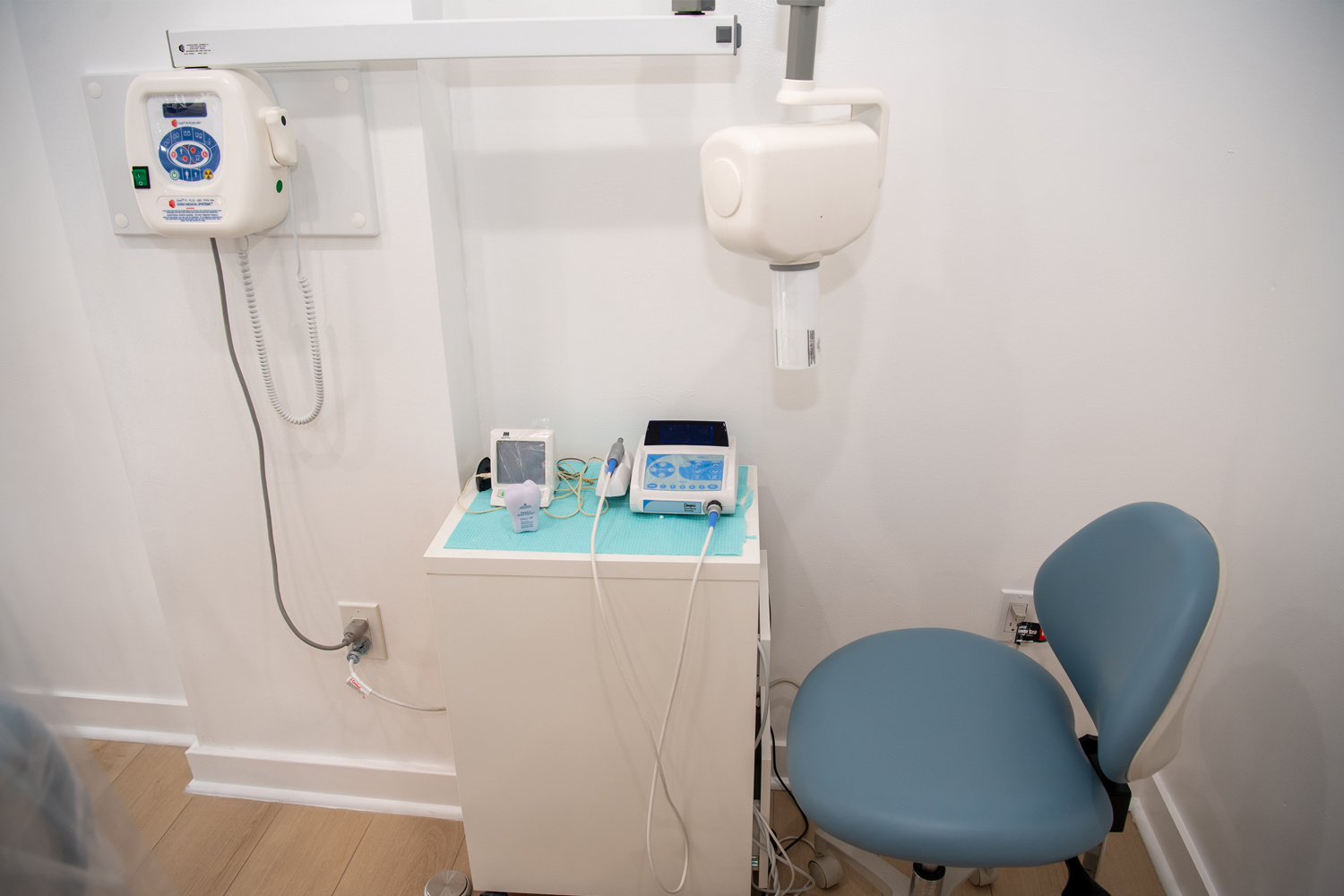
We perform endodontic surgery at both offices. Each is equipped with a Zeiss surgical microscope, CBCT 3D imaging, ultrasonic root-end instruments, and Fotona laser-assisted irrigation. Our team is bilingual in English and Spanish.
Miami Lakes
7975 NW 154th Street, Suite 250
Miami Lakes, FL 33016
Convenient for patients from Hialeah, Doral, Miramar, and Pembroke Pines.
Bay Harbor Islands
1045 Kane Concourse, Suite 204
Bay Harbor Islands, FL 33154
Convenient for patients from Miami Beach, Aventura, Sunny Isles Beach, Surfside, and Coral Gables.
Frequently Asked Questions
-
No. The procedure is done under local anesthesia, and most patients report the surgery itself is comfortable. Afterward, expect soreness and swelling similar to a tooth extraction for two to three days. Over-the-counter ibuprofen or acetaminophen usually controls it. Prescription pain medication is rarely needed, and we provide written aftercare instructions before you leave.
-
Gum tissue heals within one to two weeks, and sutures are removed after about seven days. Bone healing at the root tip takes longer, typically six months to a year, and is confirmed with follow-up imaging. You can return to normal activity the day after surgery, avoiding heavy exercise for 48 hours.
-
Yes. Molar apicoectomies are more complex because the roots sit closer to the sinus (upper molars) or the nerve canal (lower molars), and access is tighter. CBCT imaging lets us plan the approach around those structures. Success rates for molars are somewhat lower than for front teeth, which is one reason molar surgery belongs with an endodontist.
-
A root canal works from the top of the tooth: the endodontist opens the crown, cleans the canals, and seals them. An apicoectomy works from the bottom: a small incision in the gum exposes the root tip, which is trimmed and sealed. An apicoectomy is only considered after a root canal has already been done.
-
Usually not. One advantage of an apicoectomy is that the existing crown and post stay in place, because the surgery does not go through the top of the tooth. If your crown is leaking or has open margins, we will tell you, since a poor seal is a common reason root canals fail in the first place.
-
A small percentage of apicoectomies do not heal. When that happens, the options are a second surgery, intentional replantation (removing the tooth, treating it outside the mouth, and replacing it), or extraction with an implant or bridge. We review the CBCT to identify why healing stalled, most often a crack, before recommending the next step.
-
No referral is required. Many patients are referred by their general dentist, and we send a full report back to that dentist after treatment. You can also call either office directly to schedule an evaluation. Bring any recent X-rays if you have them; we take a CBCT scan on site if needed.
Need an Apicoectomy in Miami?
We evaluate failed root canals with CBCT at both offices and tell you whether surgery is the right step.
Schedule Your Appointment



Your best option
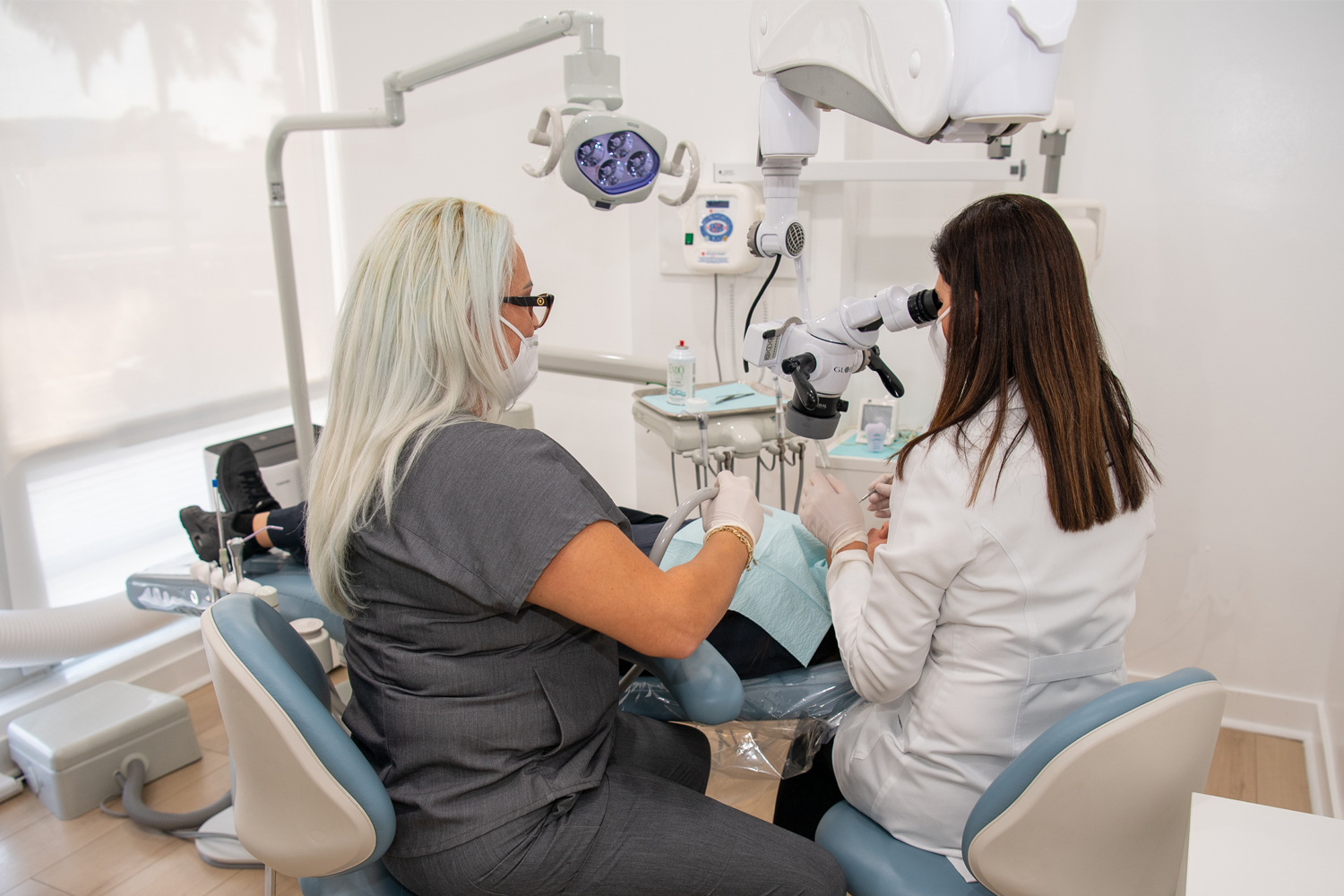
We keep fluid communication with the dentists who refer their patients to us, making a team of joint assistance so that the patient is treated efficiently. After the endodontic treatment, the dentist is provided with a detailed report of all the procedures and their results so that they can continue with the dental restoration.
A canal treatment is the last resort before extracting a tooth to keep those teeth whose nerves have been affected. We are specialists in Endodontics, and we count with the best professionals and the latest technologies to assist you. So whether you are a patient or a dentist, Advanced Endodontic Group is the solution you are looking for..