
Cracked Tooth Treatment in Miami: Diagnosis and Repair
Cracked tooth treatment in Miami depends on how deep the crack runs: a crown for shallow cracks, root canal therapy plus a crown when the crack reaches the pulp, and extraction only when the crack splits the root. Advanced Endodontic Group diagnoses cracks under a surgical microscope with CBCT imaging at two Miami offices, often the same day.
Why See an Endodontist for a Cracked Tooth in Miami?
Cracks are hard to see, hard to find on a regular X-ray, and easy to misdiagnose. Endodontists are trained to locate cracks with magnification, transillumination, bite testing, and CBCT bone-loss patterns, then decide whether the pulp can be saved. Getting the depth right matters, because the treatment for a shallow crack and a deep one are completely different.
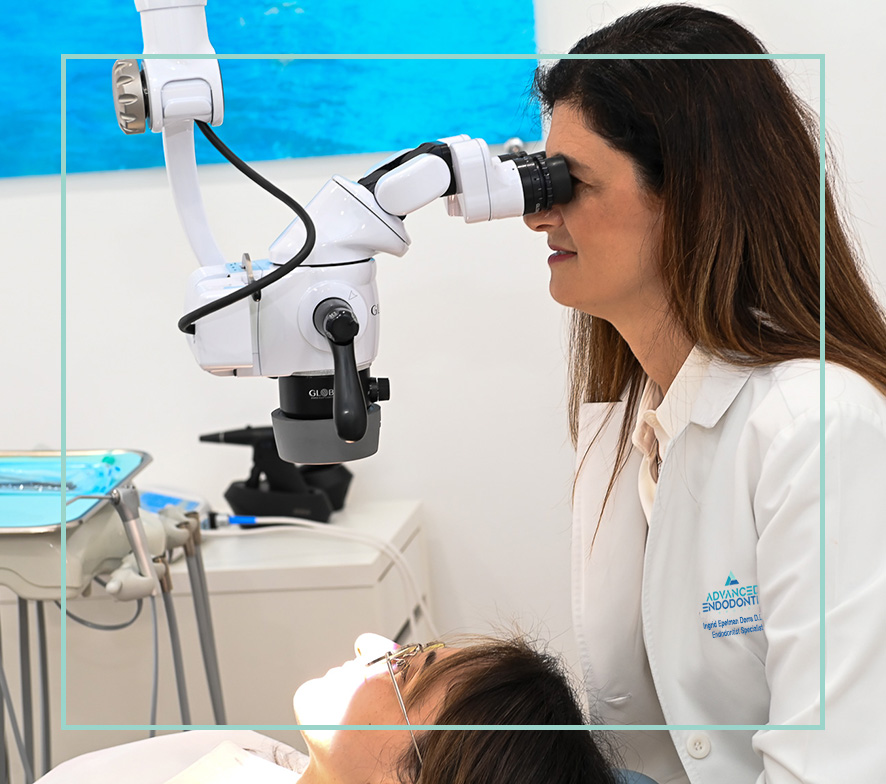
Our practice is limited to endodontics, and the equipment that makes crack diagnosis reliable, a Zeiss surgical microscope at up to 25x magnification and cone-beam CT, is in every operatory at both offices. Dr. Ingrid Epelman-Dorra has over 25 years of experience evaluating cracked teeth referred by general dentists across Miami-Dade and Broward.
Cracked teeth are also where second opinions matter. Some teeth with a small, isolated gum pocket next to a crack are extracted when they could be saved.
"Condemning a cracked tooth based on a small, isolated pocket does not seem justified."American Association of Endodontists, clinical article, 2023
What Are the Different Types of Cracked Teeth?
The American Association of Endodontists classifies cracked teeth into five types by depth and direction: craze lines, fractured cusp, cracked tooth, split tooth, and vertical root fracture. The first two rarely involve the pulp. A cracked tooth may or may not, depending on how far the crack has traveled. A split tooth and vertical root fracture usually cannot be saved.
| Type | Where the crack runs | Usual treatment |
|---|---|---|
| Craze lines | Enamel only, on the surface | None; cosmetic at most |
| Fractured cusp | A corner of the chewing surface breaks away | Crown or onlay; root canal only if the pulp is exposed |
| Cracked tooth | From the chewing surface toward the root; pulp may be involved | Crown; root canal plus crown if the pulp is inflamed |
| Split tooth | Crack has separated the tooth into two pieces | Extraction, or removal of one segment in select cases |
| Vertical root fracture | Starts in the root and travels upward | Extraction, or removal of the fractured root on multi-rooted teeth |
Molars, especially lower first molars, crack most often because they do the bulk of the chewing work. Large old fillings, root canal treated teeth without a crown, grinding, and chewing ice all raise the risk. Cracks rarely show on a two-dimensional X-ray unless the pieces have separated. Our existing tooth fissures page covers the same conditions under the older name.
What Are the Symptoms of a Cracked Tooth?
The classic cracked tooth symptom is a sharp pain when you bite down or release, especially on something hard or chewy. Other signs include sensitivity to cold that comes and goes, pain that is hard to pin to one tooth, and discomfort that appears only with certain foods. Many cracked teeth show nothing on a standard X-ray.
This pattern is often called cracked tooth syndrome. The pain happens because chewing flexes the two sides of the crack and irritates the pulp; releasing the bite lets the pieces snap back. As the crack deepens, the pulp becomes inflamed (pulpitis), and the pain can turn constant or start waking you at night.
If the pulp dies, the tooth may become painless for a while, then develop an abscess. A cracked tooth that stops hurting on its own is not good news.
How Do We Diagnose a Cracked Tooth?
We locate cracks with a combination of tests, because no single test is reliable alone: a bite test on each cusp using a plastic instrument, transillumination with a fiber-optic light, a dye that stains the crack line, inspection under the surgical microscope, and a CBCT scan to look for the bone-loss pattern that accompanies a deep crack.
Pulp testing with cold and an electric pulp tester tells us whether the nerve is healthy, inflamed, or dead. Probing around the tooth finds the narrow, deep pocket that forms along a crack that has reached the root. Together these tests determine which of the five categories the tooth falls into and whether it can be saved. See how we separate tooth pain from other causes on our differential diagnosis page.
How Is a Cracked Tooth Treated?
Treatment matches the depth of the crack. A crack confined to the crown with a healthy pulp is treated with a full-coverage crown that holds the pieces together. A crack that has inflamed or infected the pulp needs root canal therapy followed by a crown. A crack that has split the tooth or fractured the root means extraction.
The crown is not optional. A 2024 systematic review in the Journal of Dentistry (Zhang et al.) found that root canal treated cracked teeth restored without a full crown had an 11.3-fold higher risk of extraction, and reported tooth survival of 90.5% to 91.1% at one to two years for cracked teeth treated with a root canal and crowned. A separate study cited by the AAE in 2023 reported two-year survival of 94% with a crown versus 20% without.
Our part is the diagnosis, the root canal when the pulp is involved, and a written report to your general dentist, who places the crown. We coordinate timing so the tooth is protected with a bonded core or temporary until the permanent crown is seated.
What Happens If a Cracked Tooth Is Not Treated?
Cracks do not heal, and they only move in one direction: deeper. An untreated crack lets bacteria reach the pulp, which leads to pulpitis, then pulp death, then an abscess in the bone. If the crack reaches the root, the tooth can no longer be saved. Early treatment is the difference between a crown and an extraction.
Asymptomatic cracks found during a checkup can sometimes be monitored. The 2024 Journal of Dentistry review supports observation for cracked teeth with no symptoms, with a crown recommended once any symptom appears. A 2020 meta-analysis in the Journal of Endodontics put one-year survival for root canal treated cracked back teeth at 88% (as of 2020), which is a strong argument for treating before the pulp is involved.
How Much Does Cracked Tooth Treatment Cost in Miami?
Cost depends on what the crack requires. A diagnostic visit with CBCT is the starting point . If the pulp is involved, root canal therapy on a molar in Miami typically runs $1,000 to $1,800, and the crown placed by your dentist adds $1,000 to $2,500. A crown alone, for a shallow crack, avoids the root canal cost entirely.
Most PPO dental plans cover 50 to 80% of endodontic treatment after the deductible. We verify benefits before your visit and offer CareCredit financing. See our root canal cost and insurance pages for details.
Where to Get Cracked Tooth Treatment in Miami
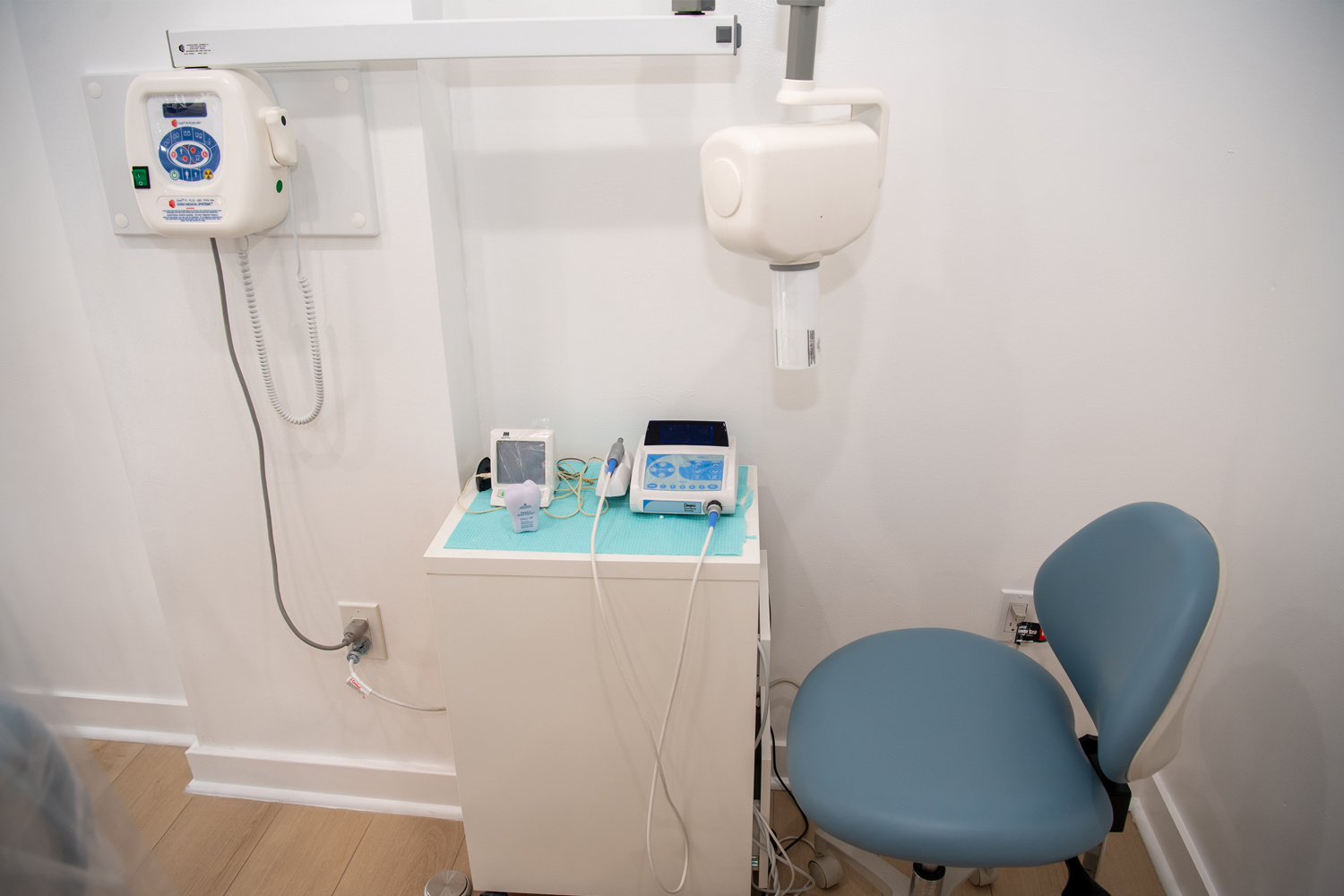
Both offices are equipped for crack diagnosis and treatment: Zeiss surgical microscopes, transillumination, CBCT 3D imaging, and Fotona laser-assisted irrigation for root canal cases. Our team is bilingual in English and Spanish.
Miami Lakes
7975 NW 154th Street, Suite 250
Miami Lakes, FL 33016
Convenient for patients from Hialeah, Doral, Miramar, and Pembroke Pines.
Bay Harbor Islands
1045 Kane Concourse, Suite 204
Bay Harbor Islands, FL 33154
Convenient for patients from Miami Beach, Aventura, Sunny Isles Beach, Surfside, and Coral Gables.
Frequently Asked Questions
-
No. Tooth enamel and dentin have no blood supply to repair a crack, so cracks stay the same or get deeper. Pain may come and go as the crack opens and closes, which can give the impression it healed. A tooth that stops hurting after months of symptoms may mean the pulp has died, so get evaluated promptly.
-
No. If the crack has not reached the pulp and cold testing shows a healthy nerve, a full-coverage crown alone is usually enough. A root canal is needed when the pulp is inflamed beyond recovery or has died. We test the pulp before recommending either path, and we tell your dentist which one the tooth needs.
-
Biting flexes the tooth and opens the crack slightly, which stimulates the pulp and the fluid inside the tiny dentin tubules. Releasing the bite lets the crack close, producing a second sharp jolt. Between bites the tooth feels normal. This on-and-off pattern is the reason cracks are missed on X-rays and why a bite test is so useful.
-
Rarely. A standard two-dimensional X-ray only shows a crack if the pieces have separated or the crack runs parallel to the beam. A CBCT scan does not always show the crack line either, but it does show the narrow pattern of bone loss along a root that a deep crack produces. Direct inspection under a microscope remains the primary tool.
-
Do not wait if the tooth hurts. A symptomatic crack is progressing, and every week of chewing on it risks pushing the crack into the pulp or the root. Asymptomatic cracks found on a routine exam can sometimes be watched, but that decision should be made after an examination under magnification, not by default.
-
A cracked tooth with sharp pain, a piece that has broken off, or swelling should be seen within a day or two. It is not the same urgency as facial swelling or fever, which need an emergency room. Both of our offices hold same-day slots for tooth pain; call and describe what you feel when you bite.
-
A fractured cusp is a crack that breaks off a corner of the chewing surface and usually stops at the gum line, so the pulp is rarely affected and a crown fixes it. A cracked tooth runs from the chewing surface toward the root and may involve the pulp. The depth, not the size of the chip, decides the treatment.
Think Your Tooth Is Cracked?
Bite pain that comes and goes is worth a same-day look. Book online or call either office.
Schedule Your Appointment



Your best option
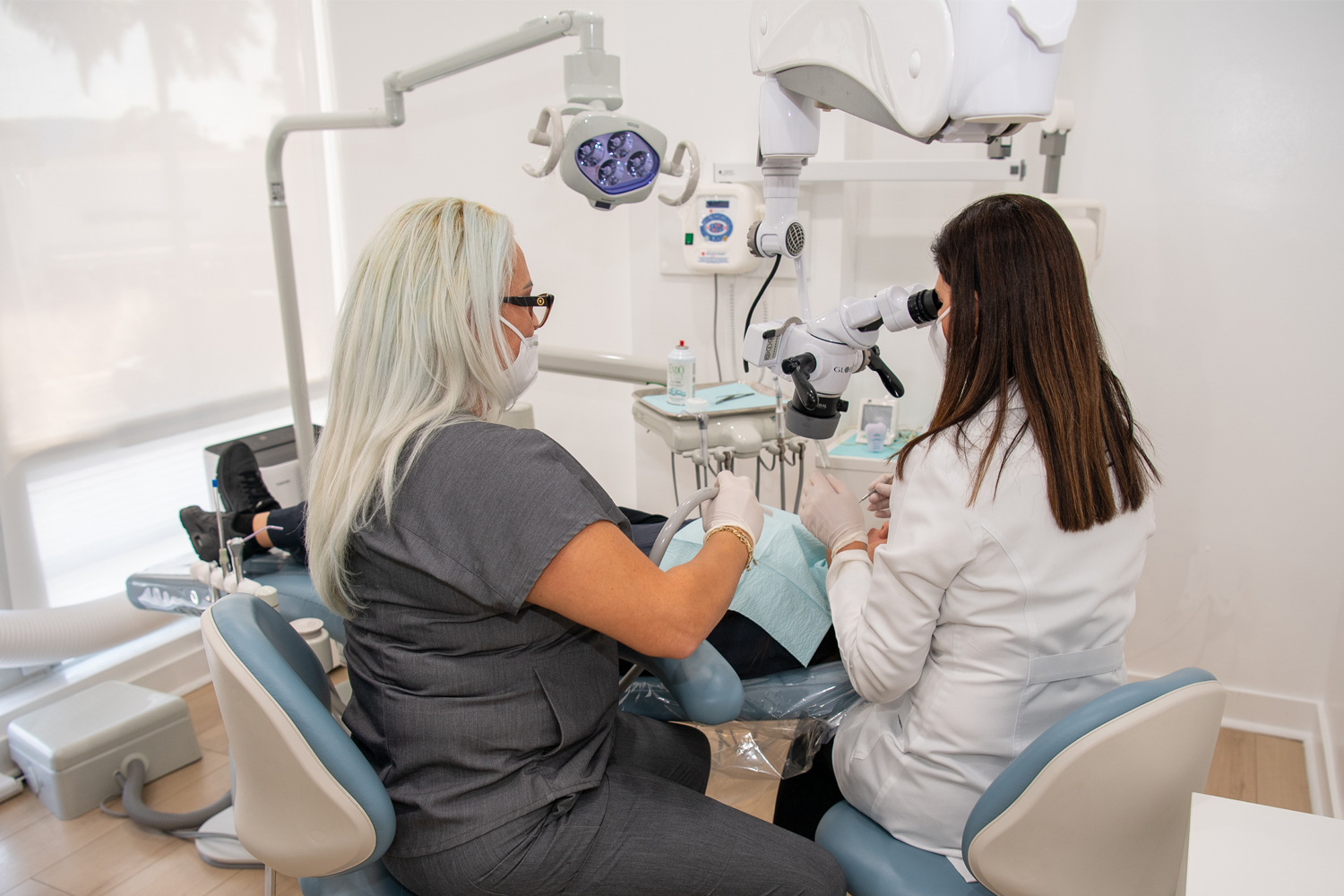
We keep fluid communication with the dentists who refer their patients to us, making a team of joint assistance so that the patient is treated efficiently. After the endodontic treatment, the dentist is provided with a detailed report of all the procedures and their results so that they can continue with the dental restoration.
A canal treatment is the last resort before extracting a tooth to keep those teeth whose nerves have been affected. We are specialists in Endodontics, and we count with the best professionals and the latest technologies to assist you. So whether you are a patient or a dentist, Advanced Endodontic Group is the solution you are looking for..