
Failed Root Canal in Miami: Signs, Causes, and Next Steps
Failed root canal in Miami: a root canal has failed when infection returns or never cleared, shown by pain, swelling, a gum pimple, or a dark spot at the root tip on an X-ray, sometimes years after treatment. Advanced Endodontic Group diagnoses failed root canals with CBCT imaging and treats them with nonsurgical retreatment or apicoectomy at two Miami offices.
Why See an Endodontist for a Failed Root Canal in Miami?
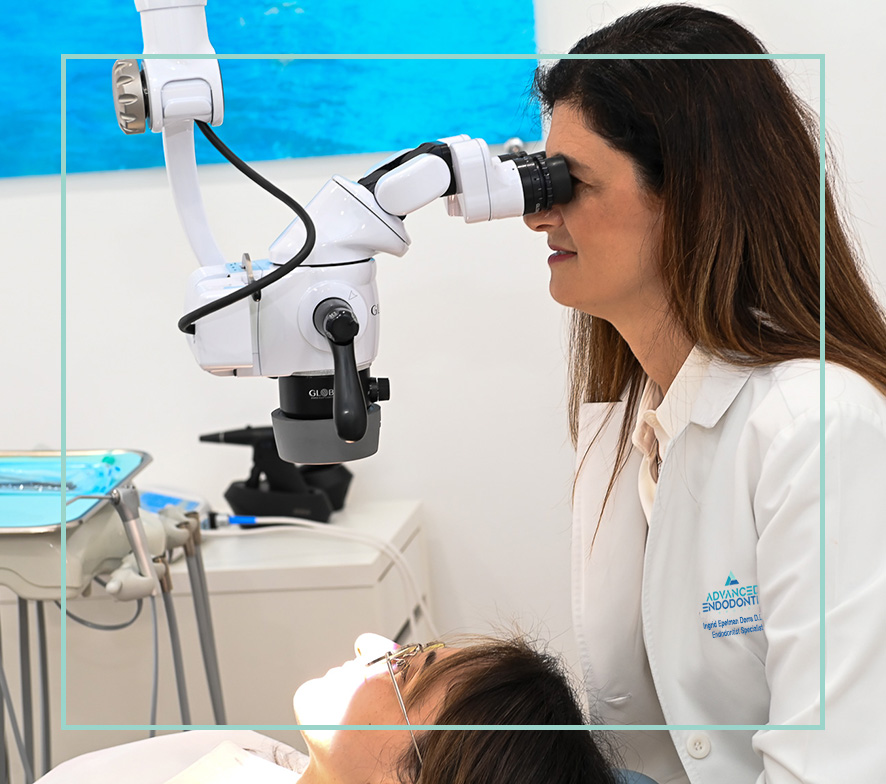
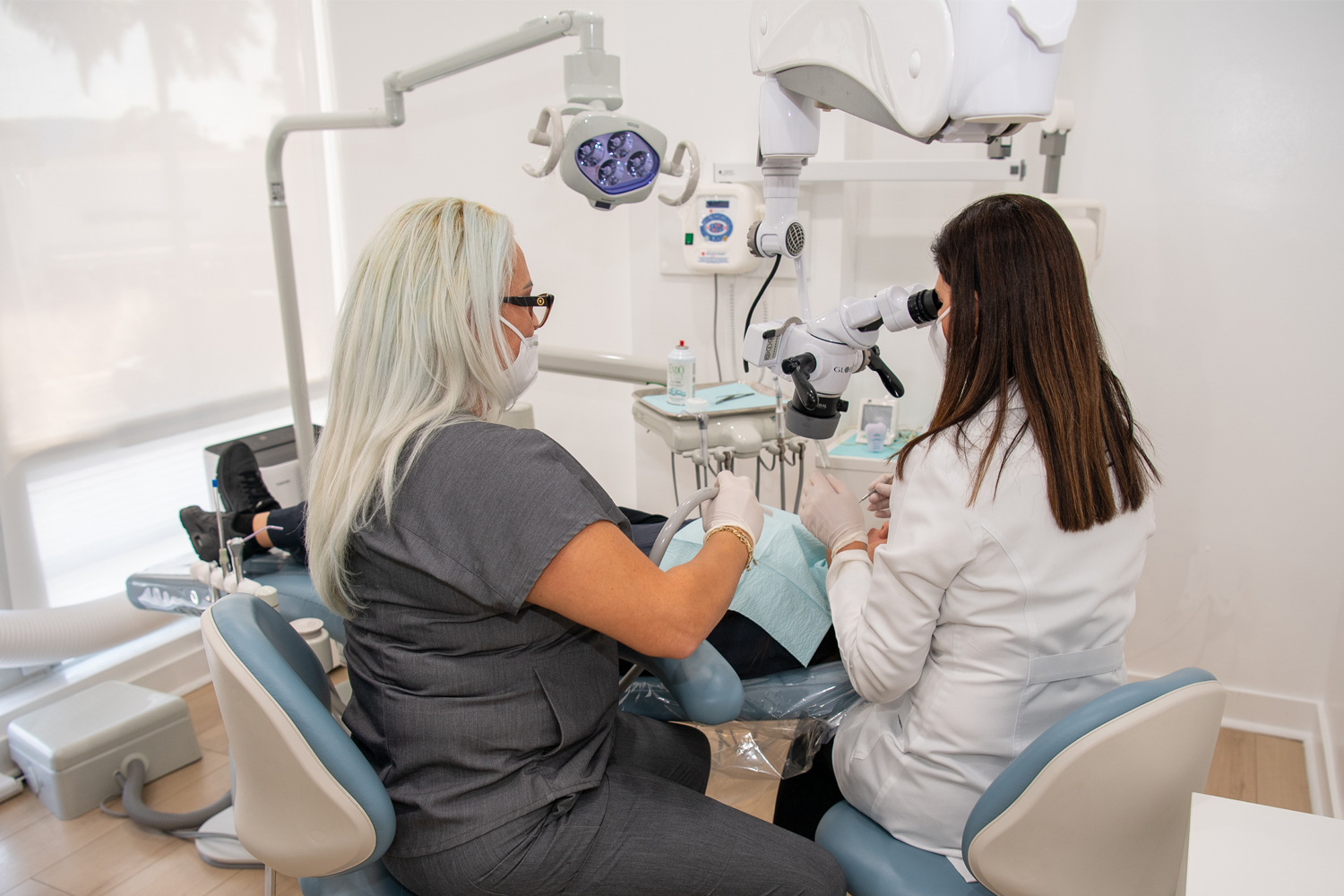
Retreating a root canal is harder than doing the first one. The old filling material has to come out, blocked or missed canals have to be found, and the reason for failure has to be identified so it does not repeat. That work needs a surgical microscope, ultrasonic instruments, and CBCT imaging, all standard at Advanced Endodontic Group.
General dentists refer most retreatment cases to specialists for that reason. Our practice is limited to endodontics, led by Dr. Ingrid Epelman-Dorra with over 25 years of focused experience, and we treat failed root canals referred from across Miami-Dade and Broward. We also handle cases where the first root canal was done abroad or years ago with no records.
Provider matters for the first treatment too. A 2025 review on PubMed Central cites insurance-database data showing molars treated by endodontists had a 5% higher ten-year survival rate than those treated by general dentists.
What Are the Signs of a Failed Root Canal?
Signs of a failed root canal include pain or tenderness when biting on the treated tooth, a dull ache that returns months or years later, swelling of the gum or face, a pimple-like bump on the gum, and a darkened tooth. Some failures cause no symptoms and are found only as a shadow at the root tip on an X-ray.
Timing varies. Early failures within the first year usually mean the canals were not fully cleaned or sealed. Late failures, five or ten years out, are more often caused by a new cavity, a leaking crown, or a crack that let bacteria back in. A treated tooth that starts hurting again is a failed root canal until proven otherwise, and the same signs can point to a developing abscess.
Why Do Root Canals Fail?
Root canals fail for a short list of reasons: a missed canal, most often the second canal in the front root of an upper molar; canals that were not cleaned to the tip; a delayed or leaking crown that let bacteria back in; new decay under the restoration; a crack in the root; or bacteria resistant to conventional disinfection.
| Cause | How we find it | Fix |
|---|---|---|
| Missed canal | Microscope and CBCT | Nonsurgical retreatment |
| Short or incomplete filling | X-ray and CBCT | Nonsurgical retreatment |
| Leaking crown or new decay | Clinical exam and X-ray | Retreatment plus a new restoration |
| Persistent lesion after a good retreatment | CBCT | Apicoectomy |
| Blocked canal, separated file, or post in place | CBCT | Apicoectomy |
| Vertical root fracture | Microscope, probing, CBCT bone pattern | Extraction |
Most root canals do succeed. A 2023 private-practice study indexed on PubMed Central tracked treated teeth over 5 to 37 years and found 97% still in place at ten years. Failure is the exception, and it is usually fixable.
How Do We Diagnose a Failed Root Canal?
We start with your history and a clinical exam: biting and tapping tests, probing around the tooth, and checking the crown for leaks. Then we take a CBCT scan. Cone-beam imaging shows infection at the root tip, missed canals, and root fractures that a flat X-ray misses. Under the microscope we can often see the missed canal directly.
CBCT changes the diagnosis often enough that we consider it standard for every suspected failure. A 2025 systematic review found that when outcomes are judged by CBCT rather than two-dimensional X-rays, far more residual lesions are detected, which is exactly why a tooth can look fine on your dentist's film and still be infected. See our technology page.
What Are the Treatment Options for a Failed Root Canal?
There are three options: nonsurgical retreatment, which reopens the tooth, removes the old filling, recleans and reseals the canals; apicoectomy, a microsurgery that removes the infected root tip and seals it from below; or extraction followed by an implant or bridge. Retreatment is the first choice when the canals can be reached. Surgery is chosen when they cannot.
| Option | Published outcome | Typical use |
|---|---|---|
| Nonsurgical retreatment | 87% success at 1 to 3 years (Journal of Dentistry, 2024) | Missed canals, short fillings, leaking crown |
| Apicoectomy | 91.3% success in randomized trials (Medicina, 2020) | Persistent lesion after retreatment, posts, blocked canals |
| Extraction and implant | 78% pooled success under matching criteria (2025 meta-analysis) | Vertical root fracture, tooth not restorable |
Sources: Journal of Dentistry 2024, Medicina 2020, 2025 meta-analysis on PubMed. Sequence matters. Torabinejad et al. (2009, summarized in the NIHR DARE database) found surgery heals faster in the first few years but nonsurgical retreatment holds up better at four to six years, which is why we retreat first when access allows and reserve surgery for teeth that do not respond.
"Non-surgical treatment was more effective in the long term."NIHR DARE summary of Torabinejad et al., Journal of Endodontics, 2009
When the tooth cannot be saved, we say so and coordinate with your dentist or surgeon. Read our comparison of root canal versus extraction before deciding.
What Is Retreatment Like and How Long Does It Take?
Nonsurgical retreatment takes one or two visits of 60 to 90 minutes under local anesthesia. We go through the existing crown or remove it if it is failing, dissolve and remove the old filling material, locate any missed canals under the microscope, disinfect with ultrasonic activation and laser-assisted irrigation, and seal the canals. Soreness for a few days is normal.
When the infection is large, we may place a medicated paste inside the canals between visits to let the bone start healing before the final seal. After retreatment you return to your general dentist for a new crown or a repair of the access opening. We follow up with imaging at six and twelve months. Aftercare is the same as for a first root canal; see our recovery guide.
How Much Does It Cost to Fix a Failed Root Canal in Miami?
Retreatment costs more than a first root canal because of the added work. In Miami, nonsurgical retreatment typically runs $1,000 to $2,200 depending on the tooth, and an apicoectomy $1,200 to $2,500. A new crown from your dentist may add $1,000 to $2,500. Extraction and an implant usually total $3,500 to $6,000.
Many PPO plans cover retreatment at the same level as a first root canal, though some limit coverage within a set number of years after the original procedure. We verify benefits before your visit and offer CareCredit financing. See our insurance and payment options page.
Where to Get a Failed Root Canal Treated in Miami
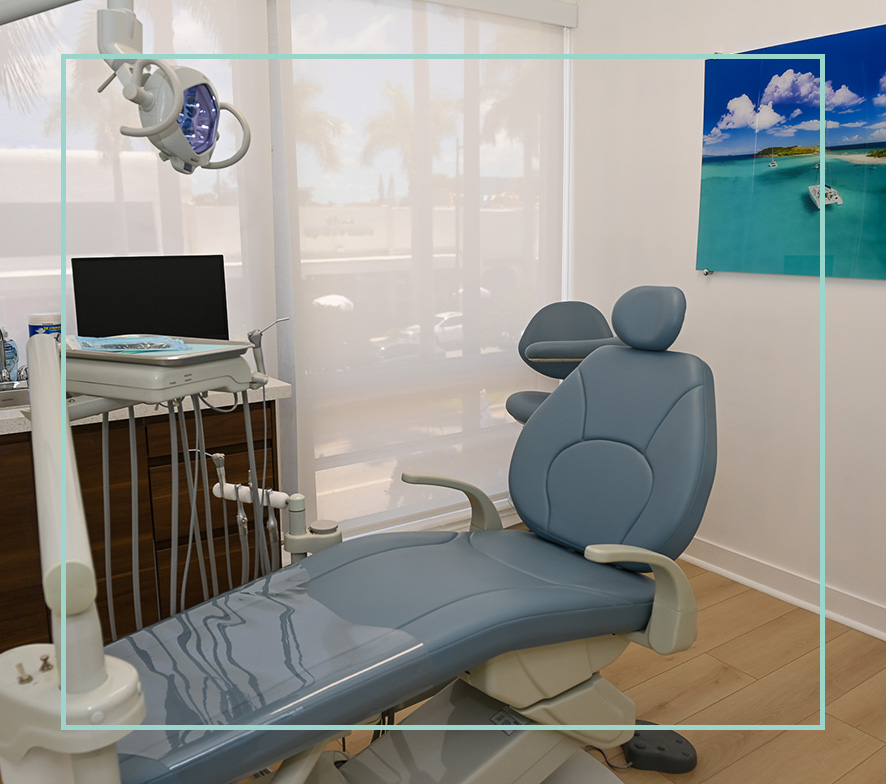
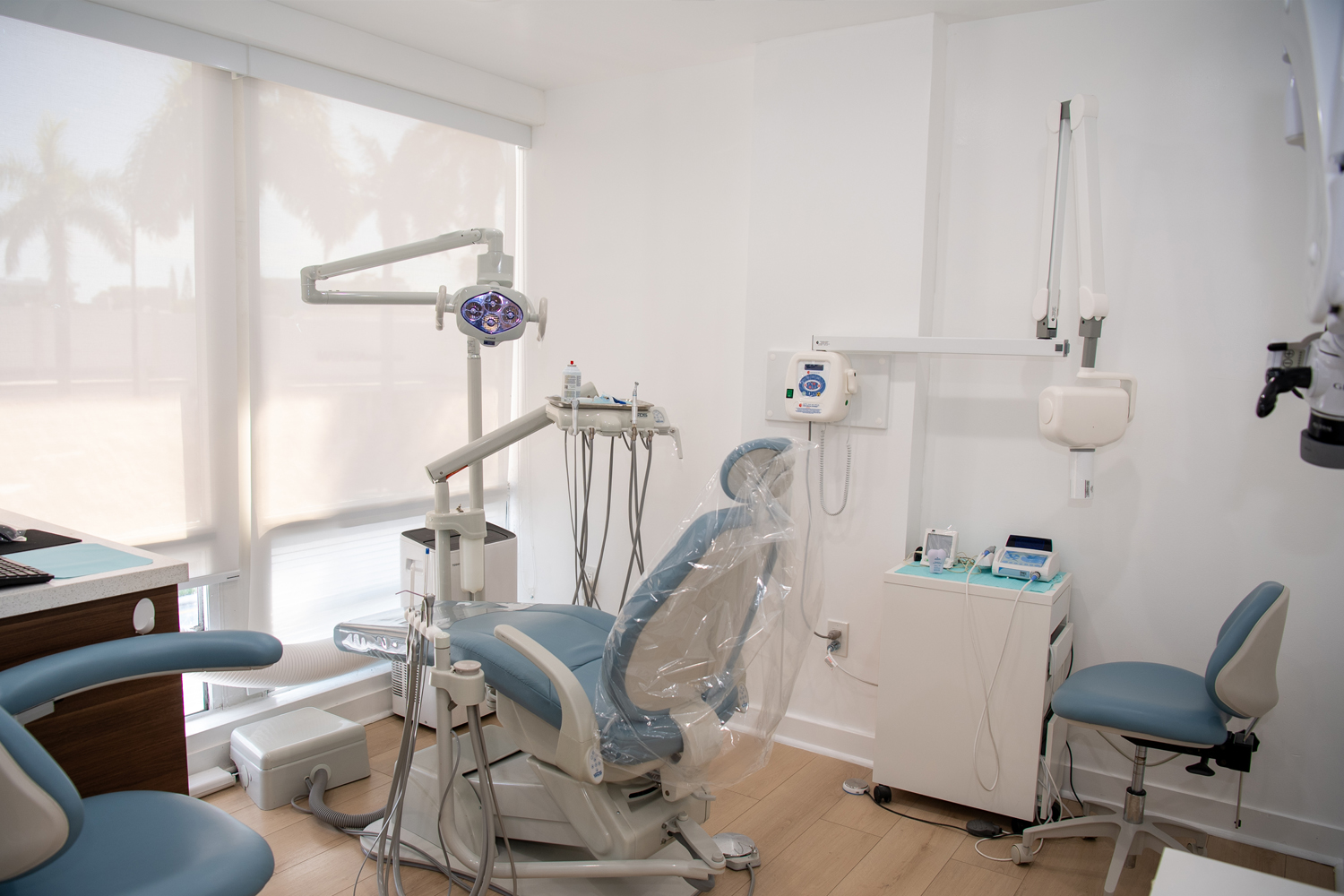
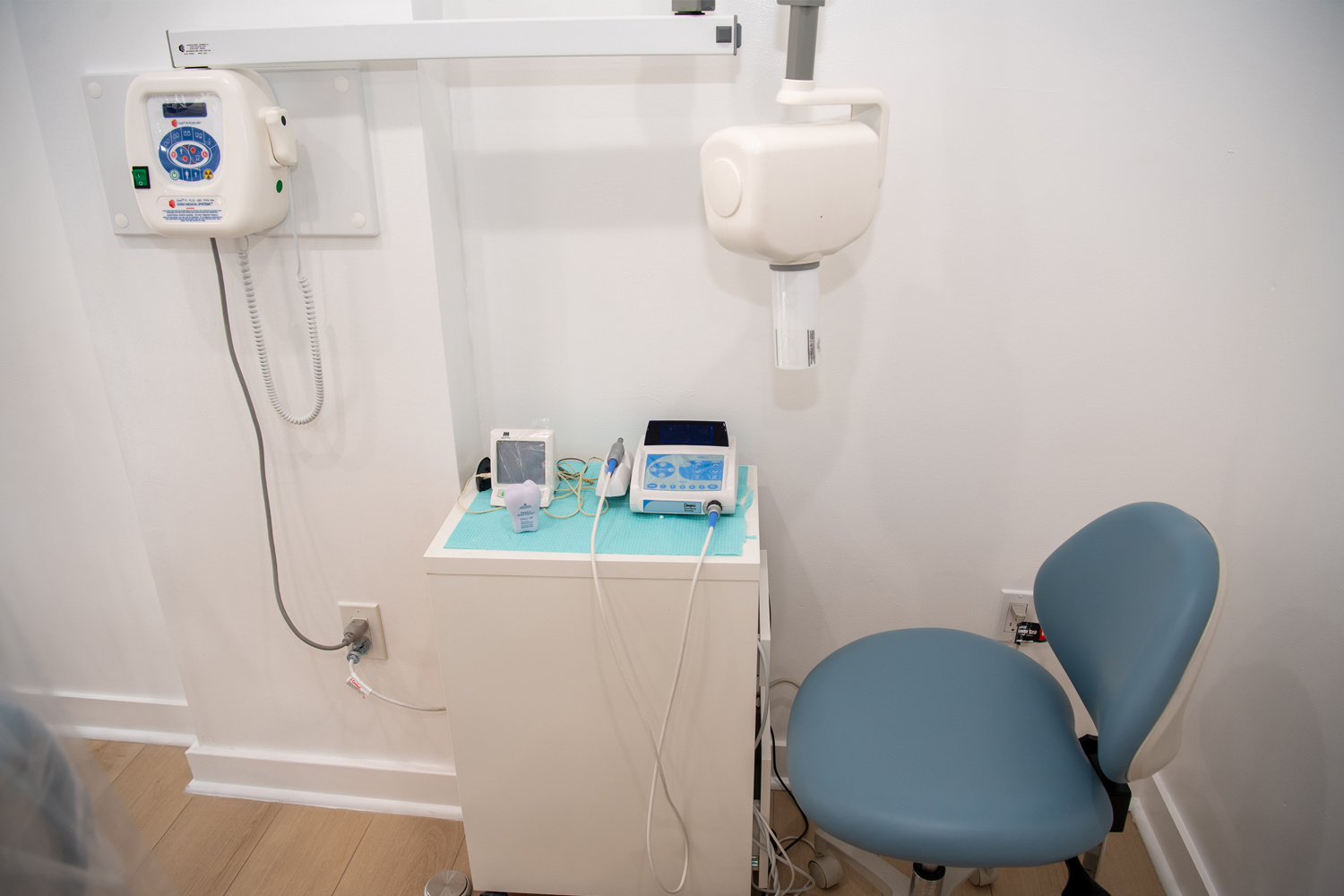
Both offices are equipped for retreatment and surgery: Zeiss surgical microscopes, CBCT 3D imaging, ultrasonic instrumentation, and Fotona laser-assisted irrigation. Our team is bilingual in English and Spanish, and we accept records from any prior provider.
Miami Lakes
7975 NW 154th Street, Suite 250
Miami Lakes, FL 33016
Convenient for patients from Hialeah, Doral, Miramar, and Pembroke Pines.
Bay Harbor Islands
1045 Kane Concourse, Suite 204
Bay Harbor Islands, FL 33154
Convenient for patients from Miami Beach, Aventura, Sunny Isles Beach, Surfside, and Coral Gables.
Frequently Asked Questions
-
Yes. Late failures are common and usually come from something new: a cavity under the crown, a crown that has started leaking, or a crack. Bacteria find a path back into the sealed canals and the infection restarts at the root tip. A tooth that was comfortable for a decade and starts aching should be evaluated with CBCT.
-
Tenderness when you bite or tap the tooth, a dull ache that comes and goes, gum swelling or a small pimple near the root, and a bad taste are the usual signs. A treated tooth has no nerve, so you will not feel cold sensitivity. Some reinfections are silent and show up only on an X-ray.
-
Usually, yes. Nonsurgical retreatment through the crown is the first-line option whenever the canals can be reached, and it resolves most failures caused by missed canals, short fillings, or leakage. Surgery is reserved for cases where a post, a blocked canal, or a separated instrument prevents access, or where retreatment has already been tried and the lesion persists.
-
Saving the natural tooth is the stronger choice when the tooth is restorable and the root is intact. Retreatment and apicoectomy carry published success rates in the 87 to 91% range, keep your own bite and bone, and cost less than an implant. Extraction makes sense when the root is fractured or too little tooth remains to hold a crown.
-
Retreated teeth that heal and receive a good crown can last as long as a first-time root canal, often decades. Published success for nonsurgical retreatment is about 87% at one to three years under standard criteria. The main threats afterward are the same as for any tooth: new decay, a leaking crown, and cracks, so routine dental care matters.
-
No. A treated tooth has no living nerve, so a reinfection at the root tip can grow for months or years without pain. These silent failures are usually caught on a routine X-ray at your dentist as a dark area near the root. They still need treatment, because the infection is destroying bone and can flare into an abscess.
-
Sometimes. If the crown fits well and is not leaking, we make a small access opening through it, and your dentist repairs the opening afterward. If the crown is leaking, has decay underneath, or is the reason the root canal failed, it needs replacement. We assess the crown at the evaluation and tell you before treatment starts.
Root Canal Still Hurting?
A CBCT evaluation tells us why and what will fix it. Book a retreatment consultation today.
Schedule Your Appointment



Your best option
We keep fluid communication with the dentists who refer their patients to us, making a team of joint assistance so that the patient is treated efficiently. After the endodontic treatment, the dentist is provided with a detailed report of all the procedures and their results so that they can continue with the dental restoration.
A canal treatment is the last resort before extracting a tooth to keep those teeth whose nerves have been affected. We are specialists in Endodontics, and we count with the best professionals and the latest technologies to assist you. So whether you are a patient or a dentist, Advanced Endodontic Group is the solution you are looking for..